Solutions / Tympanometers / Acoustic Reflex Testing
Acoustic Reflex Testing

Acoustic Reflex Testing

Learn how to perform acoustic reflex testing with the Titan tympanometer.
Get a quote Find a distributor
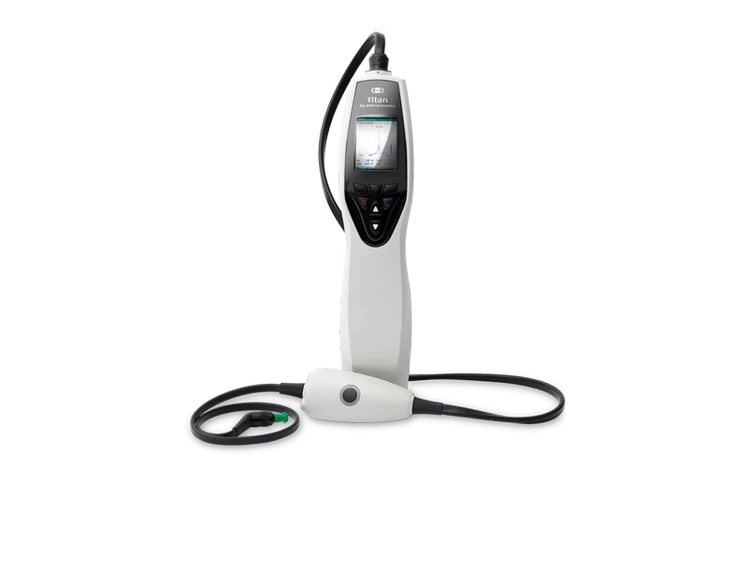
This is a photo of the Titan IMP by Interacoustics

Titan Support

The acoustic reflex is the contraction of the stapedius muscle elicited by the presentation of an acoustically loud sound. When either ear is presented with a loud sound, the stapedius muscles on both sides contract. Contraction of the stapedius muscle tilts the anterior stapes away from the oval window and stiffens the ossicular chain. This results in increased impedance which is measured as a small decrease in compliance by an ear canal probe. The stapedius muscle is innervated by the seventh cranial (facial) nerve (CNVII). Therefore, in the presence of CNVII paralysis, the stapedius muscle is likely to be affected.
Acoustic reflex results make a major contribution to differential diagnosis and should be part of every basic audiological evaluation. They can provide/confirm information about the type (conductive, sensory, neural) and degree of hearing loss.
An acoustic reflex will most likely be elicited if all of the following conditions are met:
Normal middle ear function
Loud enough stimulus to elicit the response
No abnormal adaptation to stimulus
However, about 5% of the adult population have absent acoustic reflexes.
The pure tone intensity range to elicit an acoustic reflex is 70 to 100dBHL (median = 85 dBHL)

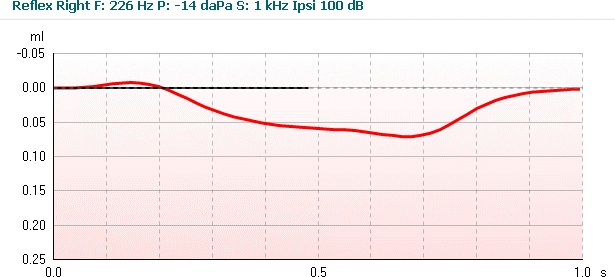
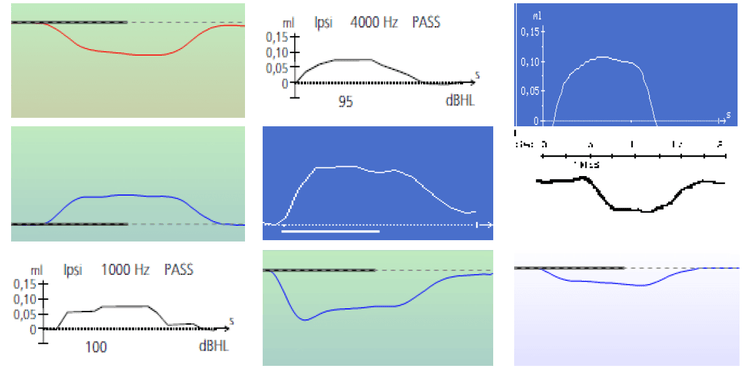
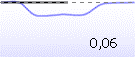
Downward-oriented reflex curve, which deviates 0.06 below the x-axis.

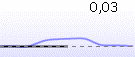
Upward-oriented reflex curve, which deviates 0.03 above the x-axis.

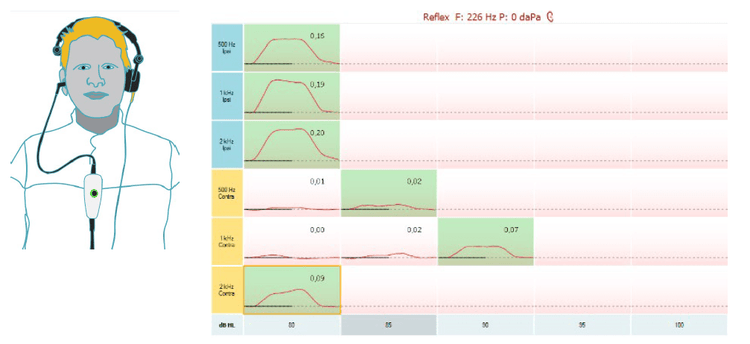
Man with probe in the right ear and headphone placed on the left ear. True ispilateral reflexes at 80 dB HL for 0.5, 1, and 2 kHz. True contralateral reflex at 85 dB HL for 0.5 kHz. True contralateral reflex at 90 dB HL for 1 kHz. True contralateral reflex at 80 dB HL for 2 kHz.

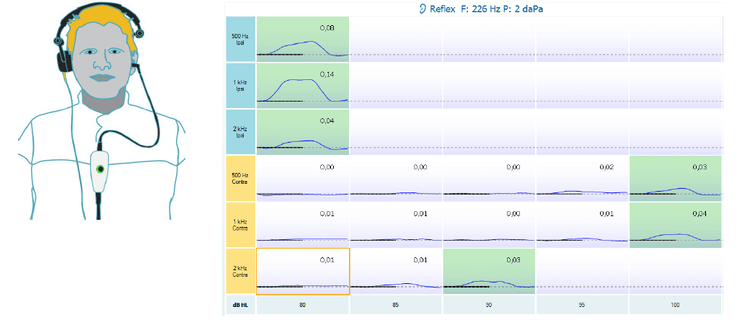
Man with probe in the left ear and headphone placed on the right ear. True ispilateral reflexes at 80 dB HL for 0.5, 1, and 2 kHz. True contralateral reflex at 100 dB HL for 0.5 and 1 kHz. True contralateral reflex at 90 dB HL for 2 kHz.

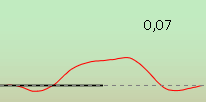
Acoustic reflex with a deflection value of 0.07 ml. The reflex is green to denote a true reflex.

Nine different, true acoustic reflexes. All have a flat peak with a sufficient deflection value to pass as a reflex.

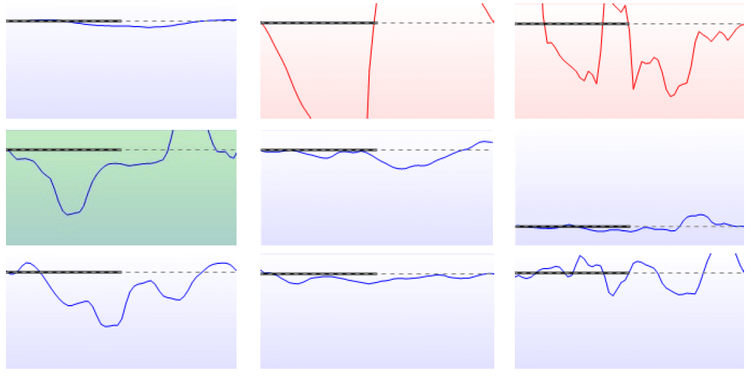
Nine different, non acoustic reflexes. Some have deflection values that are too small, and some are all over place, moving up and down and crossing the x-axis.

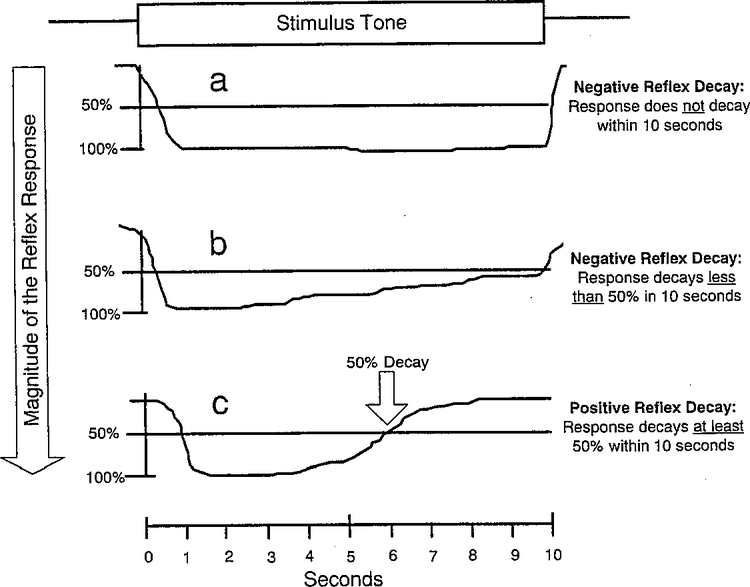
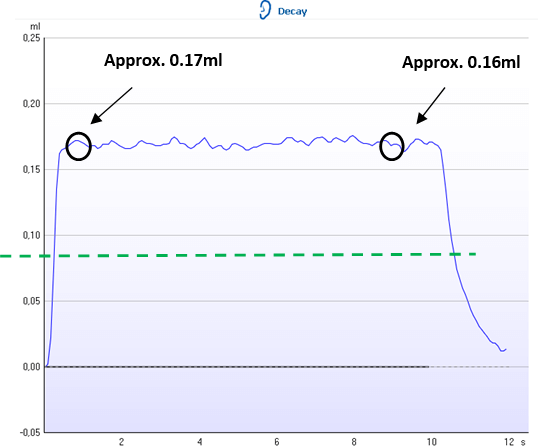
Positively displayed acoustic reflex. The deflection value at onset is about 0.17 ml. The deflection value after 10 seconds is about 0.16 ml. Thus, the response does not cross the 50% threshold at about 0.085 ml, which is visible by a green dotted line.

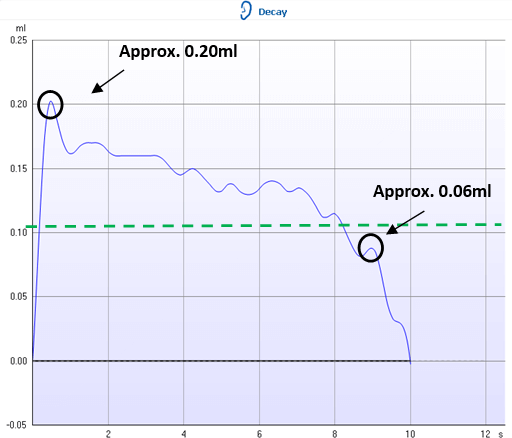
Positively displayed acoustic reflex. The deflection value at onset is about 0.20 ml. The deflection value after 10 seconds is about 0.06 ml. Thus, the response crosses the 50% threshold at about 0.10 ml, which is visible by a green dotted line.

Contact your local distributor

Our world-wide experts are ready to help you find the right solution.
Find a distributor