Join the Interacoustics community and receive news about new products, events and much more
In this guide, we break down the main types of audiometers and help you identify which system best fits your clinical needs.
From simple screening tools to advanced, software-driven systems, today’s audiometers do far more than measure hearing. They shape your workflow, your clinical insights, and ultimately, your patient experience.
But not all audiometers are the same, and choosing the wrong one can limit your workflows, efficiency, and clinical capabilities. In this guide, we break down the main types of audiometers and help you identify which system best fits your clinical needs.
Audiometers are most often grouped into screening, diagnostic, and clinical systems. Another key difference is whether the audiometer is standalone or PC-based.
Best for: High-volume screening where speed and portability matter more than diagnostic detail.
Screening audiometers can perform quick, basic hearing checks. They are used in environments such as:
Occupational health settings
Community screening programs
These devices focus on identifying whether a hearing problem may be present, often using simple pure tone air conduction testing. The results are generally pass/fail rather than diagnostic in nature.
Because speed and portability are the main goals, screening audiometers usually have fewer features than diagnostic or clinical systems.
Browse screening audiometers from Interacoustics:
Best for: Clinics that need reliable differentiation of hearing loss without full advanced testing.
Diagnostic audiometers build on screening functionality by allowing you to determine the type and degree of hearing loss. In addition to air conduction, these systems typically support:
Diagnostic audiometers are often used in private practices and ENT clinics. They provide more detail than screening systems but do not always include the full range of advanced tests found in clinical audiometers.
Browse diagnostic audiometers from Interacoustics:
Best for: Hospitals and specialist clinics managing complex or diverse patient populations.
Clinical audiometers are the most advanced type. They are designed for hospitals, larger clinics, and specialist practices that manage complex cases and diverse patient groups, including children.
Clinical audiometers generally support two-channel testing and a broad range of advanced tests, allowing you to tailor your test battery to each patient.
Browse clinical audiometers from Interacoustics:
In addition to functional categories, audiometers can also be described by how they are operated.
Standalone systems are self-contained hardware units with built-in controls, displays, and sound generation. Many clinicians appreciate their physical dials and predictable operation.
Advantages often include:
Familiar, tactile controls
Stability and independence from IT infrastructure
Limited need for software updates or network access
However, standalone audiometers may offer fewer options for data handling, system integration, and long-term flexibility.
As clinics manage more diverse patient populations and increasing documentation requirements, standalone systems alone are often no longer enough. This is where modern, PC-based clinical audiometers such as the Equinox Evo come into play.
PC-based systems excel in areas such as:
Automated protocols and workflows
Integration with patient management systems
Easier reporting and counseling using larger screens
Greater flexibility for software-based updates and new test options
In many modern clinics, especially where efficiency, documentation, and integration are key, PC-based systems have become the preferred choice.
One challenge with moving from standalone to PC-based systems is usability. Some clinicians miss the “touch and feel” of traditional dials, particularly during the transition period.
Hybrid solutions can help ease this shift. For example, pairing a PC-based audiometer such as the Equinox Evo with the Touch Keyboard provides tactile controls while keeping the benefits of a software-based system.
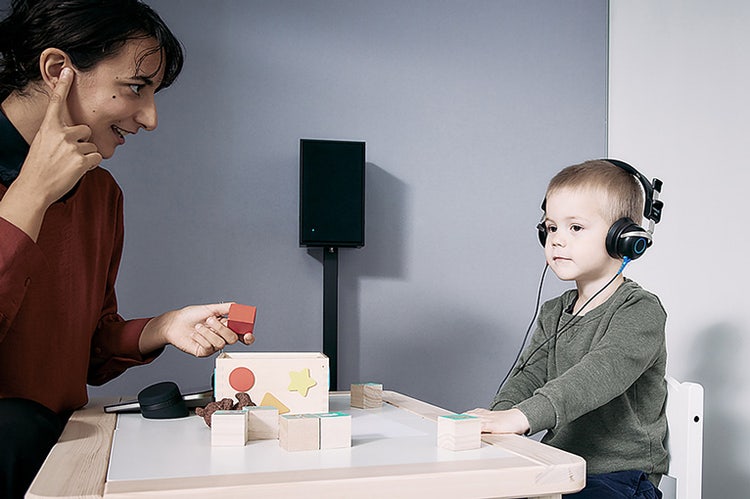
Pediatric audiometry is where the limitations of traditional systems become most apparent. Testing children requires flexibility, engagement, and seamless workflows – something not all audiometers are designed to support.
PC-based clinical audiometers like the Equinox Evo support pediatric testing by bringing together:
By combining these tools on one platform, the Equinox Evo reduces the need for multiple devices. This helps you stay focused on the child rather than the equipment.
The right audiometer for you depends on your clinical setting, patient population, and future plans. Screening programs may only require basic devices, whereas for clinics looking to combine flexibility, advanced testing, and streamlined workflows in one platform, solutions like the Equinox Evo represent the next step in modern audiometry.
By understanding the different types of audiometers – and how they align with your clinical needs – you can choose equipment that matches your needs today and supports your practice in the future. To help you choose, Table 1 provides an overview of how the Interacoustics audiometers compare to each other.
Table 1: Interacoustics audiometers defined by function and operation. *Note that several of our standalone audiometers can be used with the Diagnostic Suite software to function as hybrid audiometers, sitting between pure standalone and pure PC-based audiometers.
Considering a new audiometer for your practice? To learn more, browse our full range of audiometers or contact your local distributor.