Solutions / Balance Testing Equipment / How to perform the Supine Roll test
How to perform the Supine Roll test
How to perform the Supine Roll test
Learn how to perform the supine roll test. Includes a step-by-step test procedure with images, pre-test considerations, and next steps. Read more.
VisualEyes™ Support
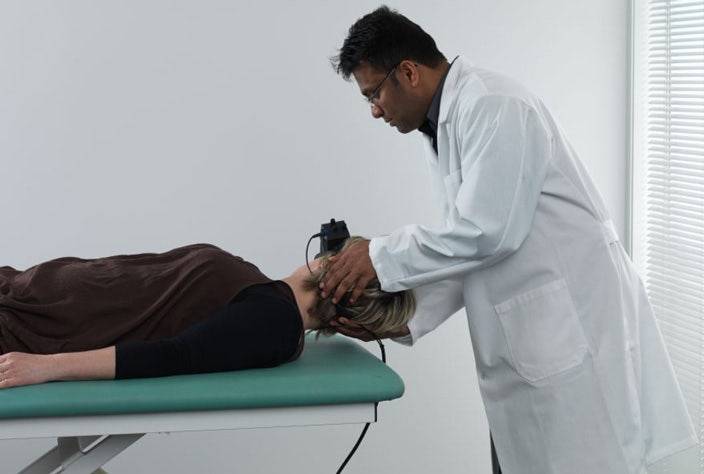
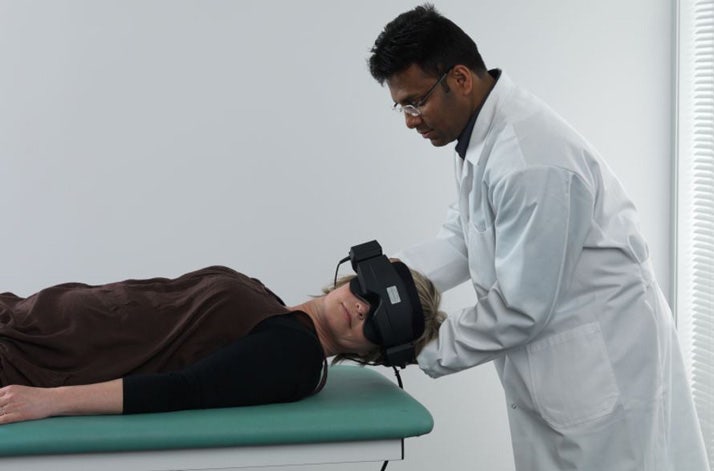
The supine roll test is a diagnostic maneuver used to identify horizontal canal benign paroxysmal positional vertigo (HC-BPPV). During the supine roll test, the patient lies down on their back and then turns their head 90 degrees to one side while keeping their eyes open. This maneuver is then repeated for the other side (Figures 1 and 2). If the patient experiences an episode of vertigo or nystagmus, this suggests the presence of HC-BPPV.
Observe the following before performing the supine roll test.
Find out whether the patient has current or past injuries of the neck or spine.
If neurological symptoms occur, stop the procedure immediately and refer for a neurological evaluation. These symptoms might include:
Weakness of the arms or legs
The consistency of fluid inside the vestibular system is viscous. Thus, you should allow enough time within each of the positions for the otoconia to achieve maximum displacement. This condition may also be responsible for a delayed onset of nystagmus.
It’s most helpful to use Frenzel lenses or VNG goggles when performing positional maneuvers. This reduces the ability of the patient to fixate during the procedure in an attempt to reduce the nystagmus. This will also allow you to see even very slight horizontal nystagmus.
It’s common for the patient to tell you during the intake interview which ear is affected and will describe accurately the symptoms of BPPV. Use this information to determine which ear is likely the affected. Always test both ears – even if the patient complains of only one side being affected.
Contact your local distributor
Our world-wide experts are ready to help you find the right solution.