VisualEyes™ Support
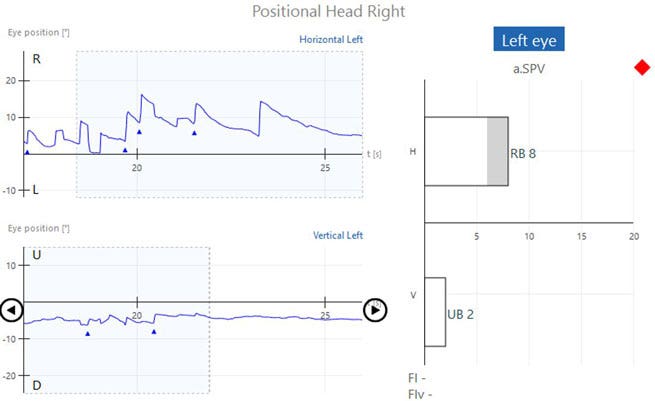
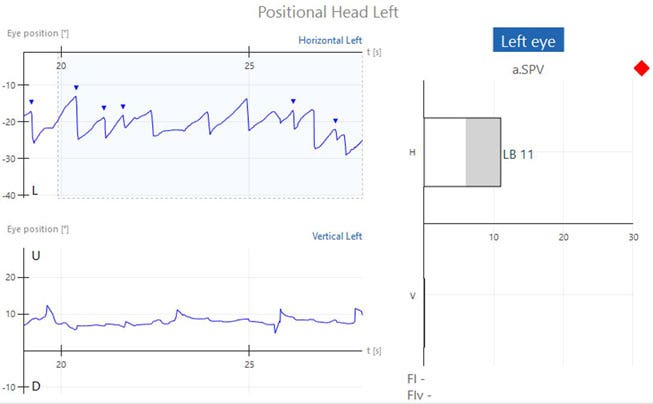
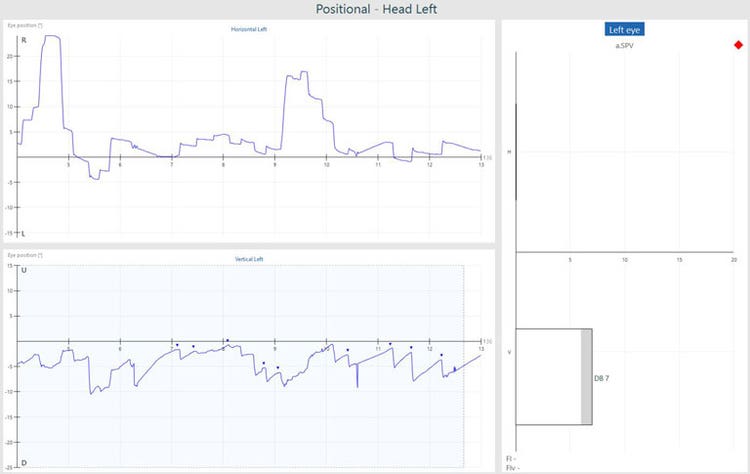
Positional nystagmus testing determines whether a change of position of the patient’s vestibular systems in space provokes nystagmus. Some nystagmus is only evident with changes in head position with respect to gravity. Both central and peripheral vestibular lesions can cause positional nystagmus and vertigo, and the examination focuses on distinguishing the two.
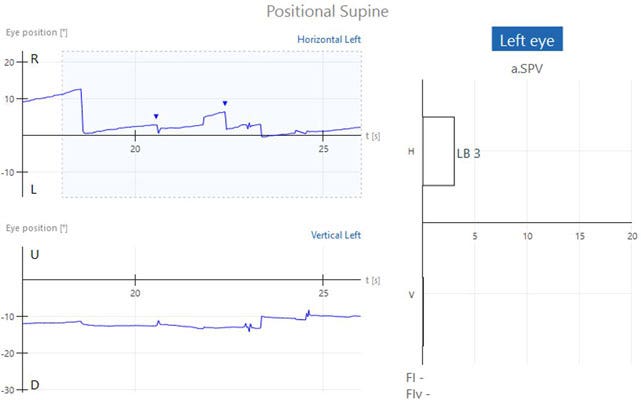
Most central positional nystagmus is static, in that the nystagmus persists as long as the head is kept in the provoking position. Nystagmus produced as a result of benign paroxysmal positional vertigo (BPPV), a peripheral vestibular pathology, is usually transient. Observations of the direction, latency and fatigability of nystagmus are important diagnostically.
Positional nystagmus is created by an asymmetry in the tonic resting rate of the two vestibular end organs.
It is critical to identify the presence of spontaneous nystagmus prior to positional testing.
There are many positions in which one might put the patient for examination. The positions described in this paper are considered standard procedure and provide the most diagnostic information.
Positional testing is performed vision-denied (using covered VNG goggles) so that the patient does not have the means to suppress nystagmus.
If the patient becomes strongly reactive when they are moved from one position to another, it is usually indicative of a vestibular lesion in the ear that is downward.
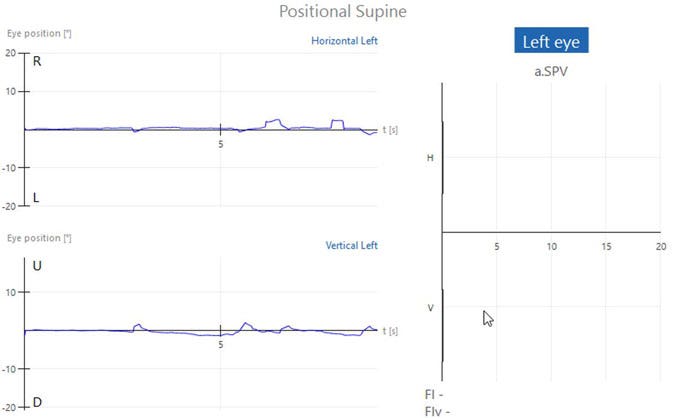
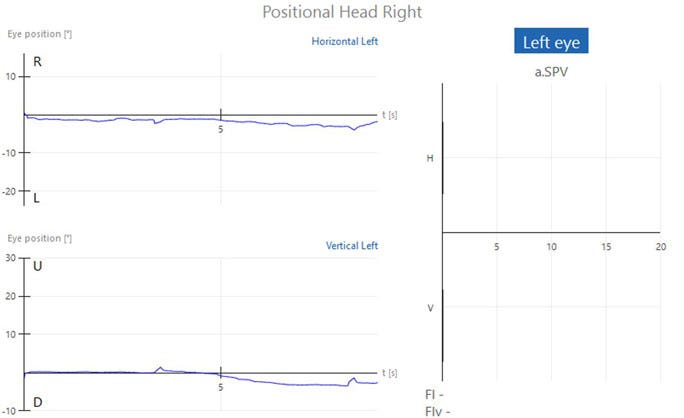
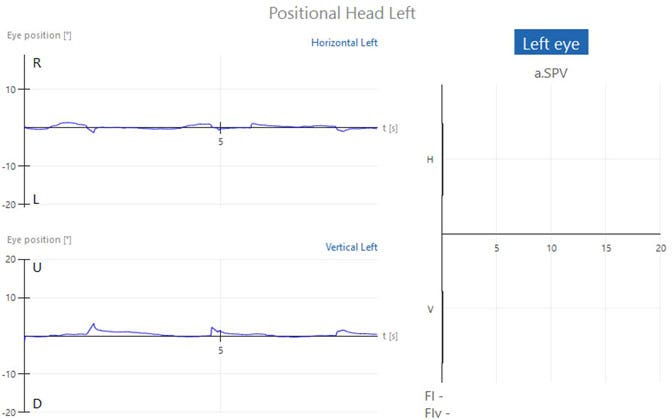
If, within 15 seconds, no nystagmus is noted in the tracing, it is not necessary to continue the test. However, if nystagmus is noted, it is helpful to continue the recording for at least 30 seconds to watch for decay.