Solutions / Balance Testing Equipment / How to perform the Gaze Stabilization Test (GST)
How to perform the Gaze Stabilization Test (GST)

How to perform the Gaze Stabilization Test (GST)

Learn how to perform the Gaze Stabilization Test (GST) in the VisualEyes™ software.
Get a quote Find a distributor
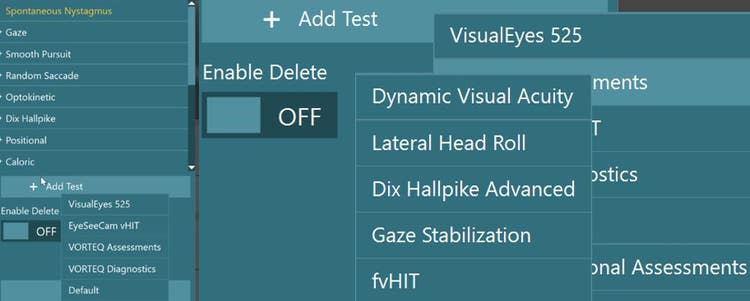
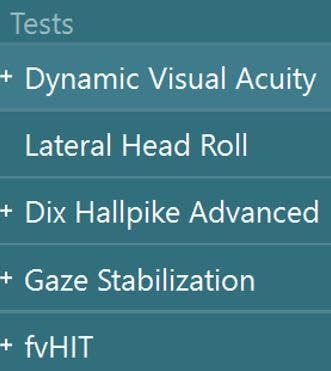
Dynamic Visual Acuity, Lateral Head Roll, Dix Hallpike Advanced, Gaze Stabilization, and fvHIT.

Screen setup

If you have purchased the VORTEQ™ Assessment or Functional Assessment bundle, you will be able to perform the Gaze Stabilization Test (GST). GST is an assessment of the vestibulo-ocular reflex (VOR) in response to functional head movements. It is often paired together with the Dynamic Visual Acuity (DVA) or Functional Vision Head Impulse test (fvHIT™) to provide a starting point for rehabilitation.

For this test, the patient will move their head at different speeds but the optotype will always stay the same size, which has been determined from their static acuity score.
Select the Optotype Stimuli display source and set the screen size and patient distance in the System Default Settings before beginning the first test. A suggested patient distance will be identified for your screen dimensions. If the distance is too much for your room setup, then choose a smaller display input.
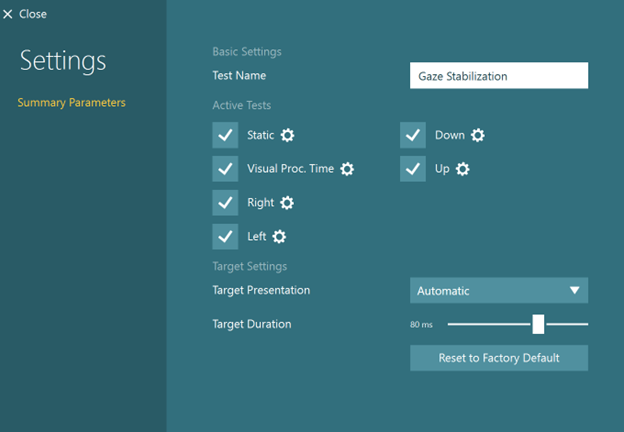
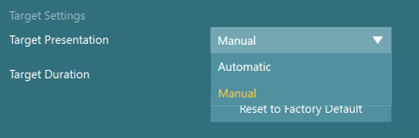
The default protocol is automatic, but you can also choose a manual target presentation. You can choose the options in Summary Parameters.
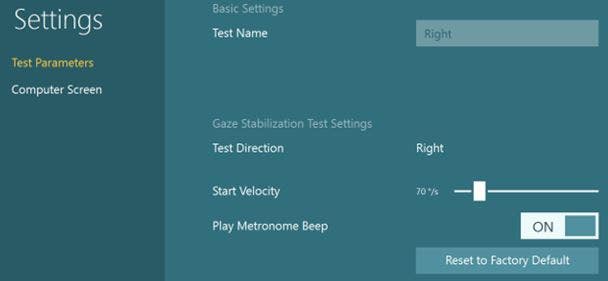
The default starting head speed is 70 degrees per second (Figure 4), but you can adjust that if needed.
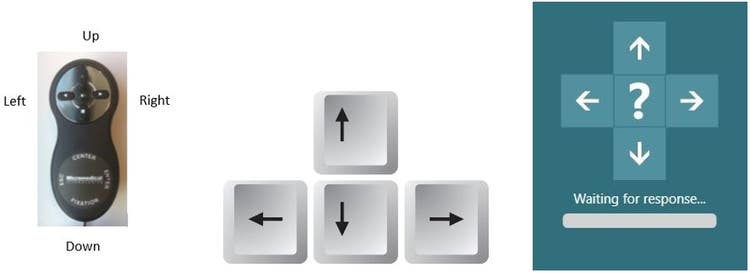
The metronome should be “ON” to give the patient feedback on how fast to move their head. The metronome sound will stop after each optotype appears to give the patient time to enter their response with the remote control. The sound will start again when they move their head.
Select Gaze Stabilization from your default protocol if you have already set it up. If not, you can add it from the subtest menu for VORTEQ™ Assessment or Functional Assessment tests.
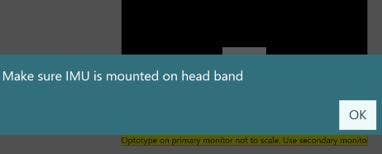
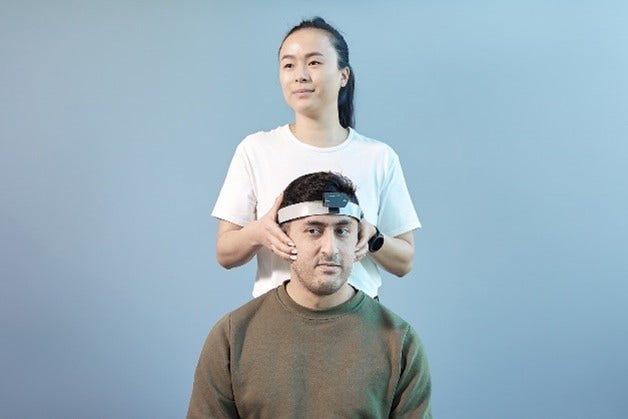
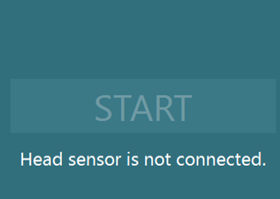
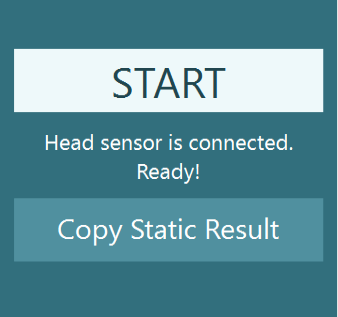
Make sure you have attached the sensor to the headband and turned it on.
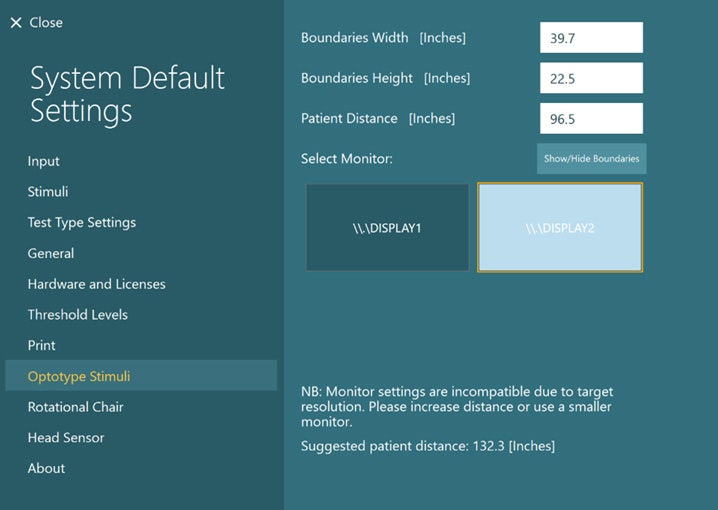
In inches, the user can alter the boundaries width, boundaries height, and patient distance.

The user can activate the following tests in the GST protocol: Static, Visual Processing Time, Right, Left, Down, and Up. It is also possible to toggle the target presentation between automatic and manual and to increase or decrease the target duration.

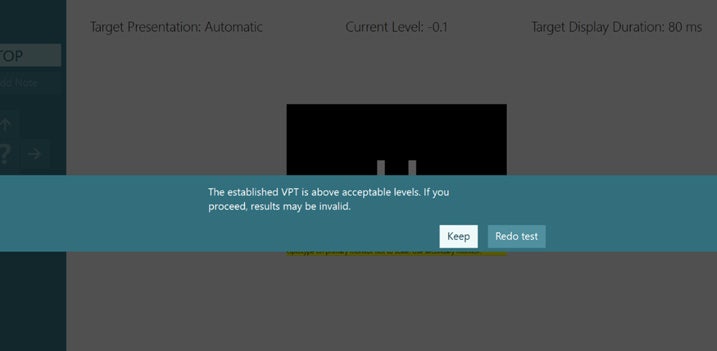
The message reads as follows. The established VPT is above acceptable levels. If you proceed, results may be invalid.

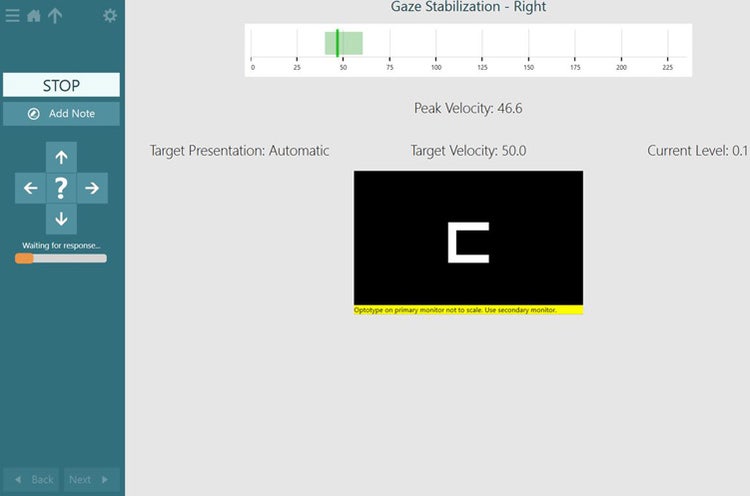
The target velocity is 50 degrees per second, with the acceptable green area lying between about 40 to 60. The patient has achieved a peak velocity of 46.6.

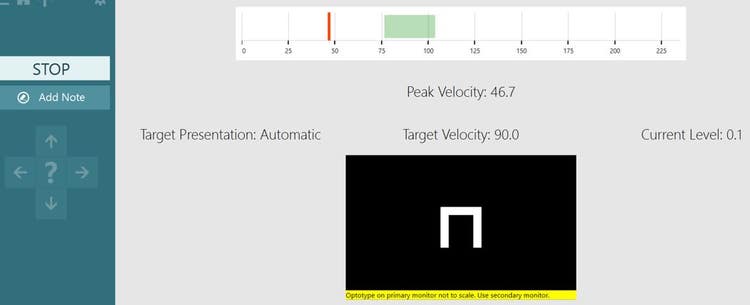
The target velocity is 90 degrees per second, with the acceptable green area lying between about 75 to 105. The patient has only achieved a peak velocity of 46.7.

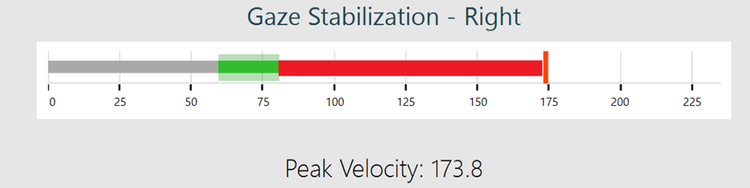
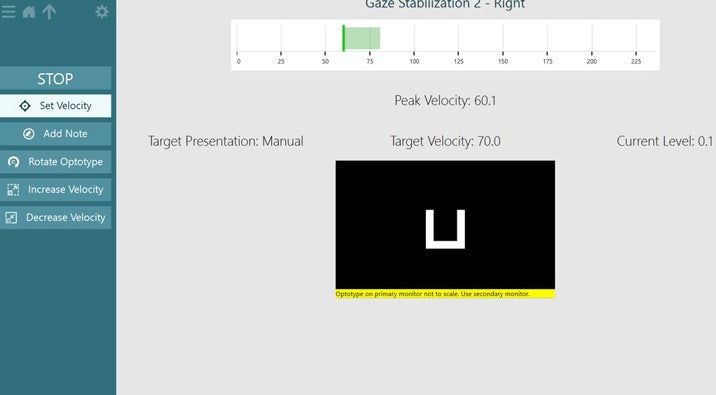
The acceptable velocity area is between about 60 to 80 degrees per second. The patient’s peak velocity is too fast at 173.8.

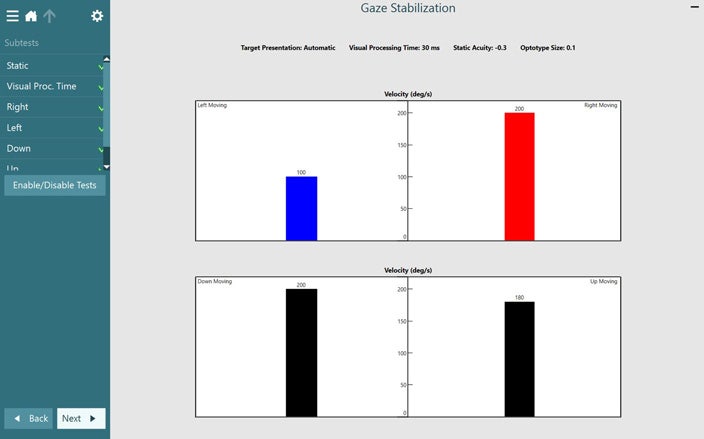
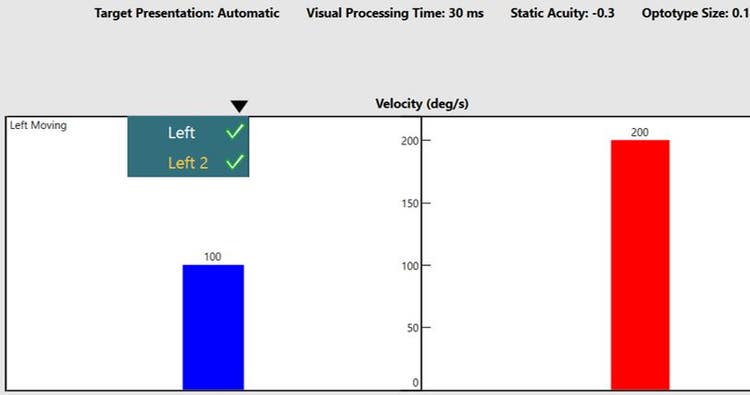
The patient achieved 100 degrees per second in the leftward direction, 200 degrees per second in the rightward direction, 200 degrees per second in the downward direction, and 180 degrees per second in the upward direction.

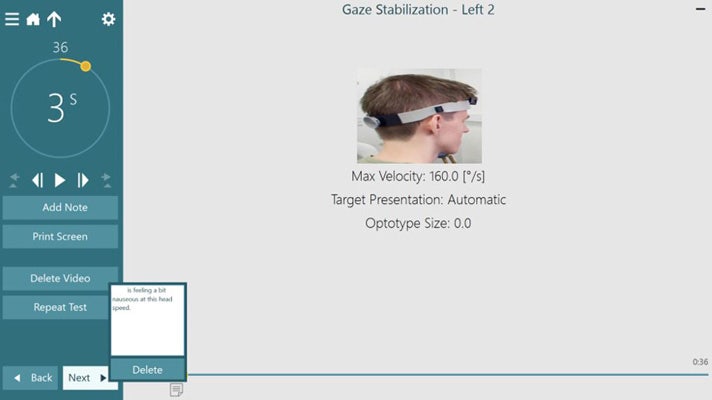
The user has added the following note: The patient is feeling a bit nauseous at this head speed.

The user has the options to stop the test, set the velocity, add a note, rotate the optotype, increase the velocity, or decrease the velocity.

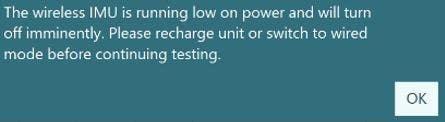
The message reads as follows. The wireless IMU is running low on power and will turn off imminently. Please recharge unit or switch to wired mode before continuing testing.

Contact your local distributor

Our world-wide experts are ready to help you find the right solution.
Find a distributor